Episode 12: Learning to Lead Without Controlling Everything – Team Talk podcast

Learning to Lead Without Controlling Everything

In this episode of the Team Talk Podcast, Sherry Bevan speaks with Kerri Coombs. At the time of the interview, Kerri was Head of Girls’ Football and First Team Coach at Oxford United. She talks openly and honestly about what it really takes to build high-performing teams – on and off the pitch.

Listen to the episode here:

Listen on Spotify.

Listen on Apple.

Episode 12: Learning to Lead Without Controlling Everything

Guest: Kerri Coombs, Oxford United

Sherry Bevan: Welcome to the Team Talk Podcast. This is the show where we discover how to build high-performing teams using lessons learned from the world of sport.

I’m your host, Sherry Bevan, and today I’m delighted to be talking to Kerri Coombs, who is Head of Girls’ Football and First Team Coach at Oxford United.

Kerri is very much a globetrotter. Between 2012 and 2022 she coached full-time overseas in private clubs, academies and companies in Morocco, the United States, China and Hong Kong. During that time she also held roles such as Academy Head Coach and Coach Educator.

Kerri returned to the UK in 2022 to take the role of Pathway Technical Lead with the then Women’s Championship side Lewes Football Club, before taking up her current role at Oxford United, who are in Tier 3. She also recently completed her UEFA A licence with the Football Association of Wales. A very warm welcome to you, Kerri.

Kerri Coombs: Hey Sherry, thank you for having me.

Tell us a bit about your background and how you got into football coaching.

Very simply, I played as a young girl from probably five or six years old all the way through. My dad coached grassroots teams that my sister played in, and I got the bug there.

Through university it was a good way to earn money – flexible hours, not too many hours a day – and I worked for a few community trusts around London while I was studying. Then it kind of just evolved. It wasn’t really a plan, and then it ended up being my full-time job. Twenty-odd years later I’m still doing it and still enjoying it, so that’s how I got into coaching.

Wow, it really sounds like football’s in your blood. You’ve been doing it for a long time, and if your father was coaching as well, I guess it was a natural thing for you to do.

Yeah, and probably quite strange because I was extremely shy as a kid. Football gave me confidence. I love the game – whether I’m playing or coaching – and because I had such a strong desire to be part of it, it forced me out of my comfort zone.

I ended up developing that coaching personality. I’m still quite a shy person away from the pitch, but in front of teams and groups of players I’m a very different version of myself.

I can imagine. And at university, just out of curiosity, did you do a sports-related degree?

I studied sports science. My original thought was to work in the background staff, maybe in a lab or something like that. But I quickly realised biomechanics and things like that were not for me, so I carried on down the coaching route.

You’ve worked with a lot of different teams in different cultures and countries. I’d really love to hear what you see as the difference between teams that are successful and perform well and those that aren’t so successful?

If we think first about teams of coaches – the multi-disciplinary team, if you like – the places where I’ve thrived, and where other coaches have thrived, have always had strong collaboration. There’s open-mindedness, people are willing to challenge each other constructively, but they also support each other. No one’s trying to tear anyone else down, which unfortunately does happen sometimes.

I’ve been very fortunate to be part of clubs, companies and academies where those values were already there, so I’ve really thrived in those environments.

In environments where it’s more like “you do you, you’re on your own”, where there’s a lot of criticism but not many solutions, that’s where things tend to fall down – especially for young coaches.

If you bring players into the picture, the most successful teams I’ve seen are built on very simple things: open communication, collaboration and getting their input. It’s not just you and them – it’s us.

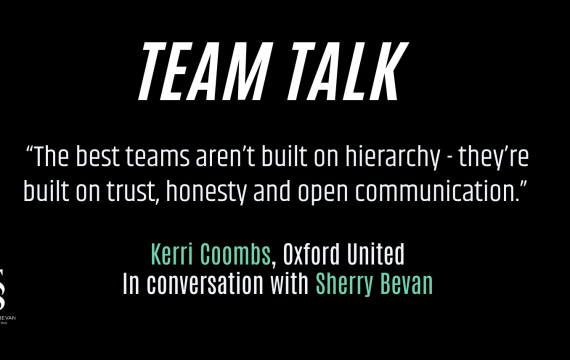
That communication, trust and honesty with each other – even when the conversation isn’t easy – is the key to success.

You mentioned the coaching teams that worked well together had that collaboration and open feedback. What made the difference so that honesty and trust develop?

That’s hard to define. I think it often comes down to the type of people and why they’re there.

Earlier in my career, when I was working in the US for example, there were a lot of coaches trying to get time on the grass. But there was a huge range of people – some thought they were further along their journey than they were, while others were just starting out and knew it. They were trying to learn and absorb everything around them.

If you’re around people who are open when you ask a question – people who share their ideas, their challenges, or say “this is where I got it wrong” – that kind of behaviour spreads. It creates a culture.

From a personal point of view, if someone is open with me, I find it much easier to be open with them. But if there’s defensiveness or gatekeeping, it becomes much harder to reach out to that person for their experiences, whether good or bad.

When I’m part of a team now, or leading one, I try to create that openness myself. Even when I’m leading a session as the Head of the Pathway, I’ll ask the coaches: What did you think? What worked? What didn’t? What would you change?

By approaching things that way, I think it helps people feel more relaxed. At least I hope so – some of them might say they’re not always relaxed when I’m there, which I’m trying to work on!

But I think if the people in leadership positions show that vulnerability first, it creates a culture where everyone else feels able to do the same.

None of us have all the answers in coaching or support roles, so being open-minded, willing to communicate, share and be vulnerable is what builds those cultures of trust.

It sounds like role-modelling from leaders is really important. Once that culture starts to form in a club or academy, it almost becomes self-perpetuating. When someone new joins, they gradually adapt to that open style of communication.

Definitely. Whenever we bring in a new coach – whether during recruitment or later on – I always try to emphasise that my role is to be a second pair of eyes for them.

I wish I’d had more of that earlier in my career. It’s so valuable to understand your blind spots, because you don’t know what you don’t know.

If someone has an idea or challenges what I’m doing, it can open my mind. I have my own philosophy, and there’s a club philosophy we need to align with for the players’ sake, but I still want those conversations.

I’ve had a couple of mentors who gave me patience too. They let me fail, then helped me reflect and pick things back up afterwards. That’s the way I try to lead now.

You mentioned failure and mistakes. Do you think that’s a key part of developing as a coach?

Absolutely. I think it’s impossible not to fail or make mistakes because the goalposts are always moving. The context is always changing, and the people in front of you are changing day to day – especially young people.

I find it hard to understand if someone says they’ve never failed or made a mistake. I know I’m a different coach from who I was even a month ago sometimes, when I’ve learned something new.

The way I phrase things, the way I approach conversations, or how I teach aspects of the game – all of that evolves. If I look back to last year or ten years ago, I probably wouldn’t even recognise myself as a coach.

Hopefully that’s growth in a good direction. But I’m sure six months from now I’ll look back again and think, “Why did I used to do it like that?”

Failure is part of the process. You have to go through it to improve.

That’s continuous learning and development. You make the best decision you can with the information you have at that moment. Six months or six years later you may see it differently, but you were doing your best with what you knew at the time.

That’s where those collaborative coaching teams you mentioned become really valuable.

What about the teams themselves – the football teams? What do you think makes a successful team on the pitch?

Are we talking youth teams or senior teams?

You choose. Pick a team and tell me what’s worked.

I’ll go with youth teams, because that’s where most of my experience is.

With youth players, it’s about trusting them more than you might think you can. They don’t have the same perspective or life experience as you, and emotionally they’re still developing. But their perspective can be really refreshing and eye-opening.

Just as they can’t fully see things from your perspective, you can’t truly see things from theirs either.

It’s about trusting them, creating leadership groups, encouraging them to share ideas and acting on those ideas – even if you’re not completely convinced in the moment.

When you do that, it builds trust. Then when you give honest feedback, they’re more receptive because they know you trust them.

Earlier in my career I sometimes did it the other way around. It was all about the tactics and structure – do this, do that – thinking that would make them better players and the relationship would follow.

I realised that approach was wrong, especially with young players.

A good example was when I was at Lewes. We had an under-16 girls team and decided to put them in a boys’ league. We thought it would challenge them and improve the games programme.

But they really struggled – technically and tactically. Our first instinct was to double down on coaching: more technique, more tactics, more structure.

Eventually we realised they weren’t looking forward to games anymore, and that’s heartbreaking as a coach.

We stripped everything back and started talking about confidence – what it means, why it matters, and how they could support each other.

The next game they played was one of the most rewarding moments of my career. You could see the belief and the fight come back. We praised their intent, bravery and confidence.

They still lost the game, but the way they felt afterwards was completely different. We’d listened to them, acted on their feedback and created a turning point.

Listening to your examples, there’s a strong thread of openness and collaboration running through everything you do – whether it’s with coaches or players.

I really admire that. In some organisations or teams you can tell when trust isn’t there, because people simply aren’t performing at their best.

It takes courage to step back and ask, “What’s going on? What are we missing here?”

What have you learned about yourself through all these experiences – working with different teams in different countries?

There’s a long list!

If we’re talking about being part of or leading a coaching team, one thing I’ve learned is that although I love collaboration and opening the floor for discussion, sometimes I need to be more decisive.

People still need clarity and guidance.

I sometimes describe it to our coaches and players as “drowning in freedom”. If things are too open, people don’t know which direction to go because there are a thousand ways to do the job.

Over the last year with this group of coaches, I’ve realised I need to meet them where they are in their journey and provide more guidance.

My instinct was to avoid being prescriptive because I didn’t want to be a dictator. I wanted to build relationships first and understand where everyone was at.

But I’m learning that leadership sometimes means giving clearer direction and explaining why we’re doing something a certain way.

Another thing I’m learning about myself is around emotional regulation.

I’m not explosive, but I feel like I need to be more aware of myself. Our job is hard and it’s tiring. We’re often rushing in from somewhere else, and sometimes I know I arrive a bit like a hurricane because I haven’t taken the time to regulate myself. That’s something I’ve only really started learning about recently – that it’s something I can control much better. I think being more mindful of that will really help me.

I’m always still in the learning phase – it comes back to what we talked about earlier. Don’t let people drown in freedom, but also I need to delegate more. I need to give people tasks that might not be done exactly the way I would do them, and that’s okay, because then we can talk about it afterwards. Sometimes it might even come out better, and then I’ve learned something as well.

I think it’s about learning to be more decisive, learning emotional regulation as a leader – because you can’t be all over the place, you’ve got to be consistent – and… I’ve forgotten my last point now. I’ve talked too long.

Allowing people to do it their way.

Exactly – delegating and letting people grow that way. Being patient, even if we don’t get to the outcome I want as quickly as I’d like. That’s okay, because we’re building other things in the meantime.

You’ve coached internationally – what interesting opportunities has that created compared to working in the UK?

I think one of the most organic opportunities has simply been working with players and parents from different backgrounds, with different expectations of what a coach should be.

For example, in Morocco it was an Arsenal soccer school, so it was a private company, and in Hong Kong it was also a private academy. As coaches, we all have our beliefs about how we should coach – not joystick coaching, not constantly telling the player on the ball what to do and not being overly expressive on the sideline.

But you quickly realise that parents sometimes expect that. They’re paying for coaching and they have a certain idea of what coaching looks like. When I first stepped into that environment, my philosophy was probably too heavily weighted towards “the game is the teacher”. Looking back now, I think that was probably a bit of a cop-out. I didn’t fully know what I was doing yet, so I leaned on that idea. But it didn’t really work for the players or the parents. I had to learn to be more expressive and adapt my approach.

In America, the players are very respectful of the coach, but they also want answers from you. You’ll hear a lot of “Yes, coach” and “No, coach”, and they’ll run through brick walls for you. That’s very much their mentality. But if a parent has a question, they will approach you. That environment gave me a lot of experience in managing parent relationships and the coach-parent dynamic. I really enjoyed working with players who were incredibly hard-working and passionate about the game.

The opportunities weren’t necessarily material things like trips or events. But looking back now, those experiences stretched and challenged me. If I’d stayed in one environment or one culture, I definitely wouldn’t be the coach I am today. I’ve had to adapt and grow in ways that maybe British parents and players wouldn’t have pushed me to in the same way. I went abroad simply to coach football – I didn’t realise how different football culture could be around the world.

That’s fascinating. You’ve had to adapt to the cultural norms around football and coaching in different places. Even something as simple as how expressive you are on the sideline depending on the country or the club environment. It proves to you that you can adapt your coaching and leadership style.

I’d probably add that maybe it’s because I’ve spent so much time in the youth game, and I have such a passion for youth development.

On a Saturday or Sunday, the result isn’t the be-all and end-all. In the environments I’ve worked in, it’s about developing players. The joy comes when you see something a player has been working on appear in a game, or something the team has been practising come together on the pitch. Or when players simply love being part of the club, and they keep coming back year after year because they feel committed to the environment you’ve created. That’s a huge win as a coach.

When you come back to the UK, where football is such a huge part of people’s lives, it’s different. Football used to be everything to me as a player, but it isn’t in quite the same way any more. In some ways that gives me a sense of calm. I still love the competitiveness, I love seeing teams play well and dominate games, but my ego isn’t tied as strongly to the result.

Since stepping back into senior football recently, I feel that emotional side starting to come back a little bit. Being on the sideline again brings that excitement. I’m being stretched again – how do I stay level and balanced in that environment? Last year I was around it, but I didn’t really feel it, and I remember thinking, “What’s wrong with me?” Because as a player I was incredibly passionate and quite emotional about football.

Those years spent in environments focused on development – planning sessions, supporting players, helping them grow – changed my perspective. If I’d stayed coaching only in the UK, I might still be quite volatile about results.

It highlights the difference between youth football and senior football. With youth teams, the focus is very much on developing players. You can still lose a game but see lots of positives in the performance to encourage and build on.

Exactly. Those are the moments I really get excited about. When something a player has been working on suddenly appears in a match and you’re on the sideline thinking, “Yes! That’s brilliant.” Those are the moments that give you that visceral feeling.

Now when I’m with the senior team on a Sunday, I find myself thinking a lot more about the result – desperate for us to score and not concede. Thankfully the emotional side of me as a player hasn’t fully returned, because that was a bit too much.

I imagine it’s very different when you’re the one on the pitch. As a coach you’re probably able to step back a little and look at things more objectively.

Exactly. And that comes back to lived experience. I have much more empathy now than I did as a young coach for what players are going through. They haven’t experienced everything yet, so they might not realise that getting overly emotional can sometimes work against them.

Looking back at how I was as a player has helped me as a coach. It makes me think about what I would want from a player now, and how I can support them. And what I might have needed at that age to become a better player and person.

I’m getting such a strong sense of what a thoughtful coach you are. As we come to the end, I’d love to ask you one final question.

What has been your favourite sporting moment ever? It doesn’t have to be football, although I have a feeling it might be!

The obvious one would be the first Euros win. I was still in Hong Kong at the time, so we were watching it at about two or three in the morning.

That was the first time in a long time that I felt that real excitement watching football again. I was nervous before the game, completely invested in it, full of emotion and passion.

Another moment that really stands out for me was my time at Lewes with the under-16s. When we really stripped everything back and focused on what the players needed as people. How do we genuinely support them on the pitch, but also give them the tools to grow into successful young women?

That was a turning point.  There was a particular performance from that team that has always stayed with me. Two moments: the Euros win, and that time with the Lewes under-16s.

Brilliant. Thank you so much, Kerri. And if people want to connect with you or follow your work, where’s the best place to find you?

The best place is LinkedIn. Feel free to reach out. We’re always looking for keen coaches in the women’s game, and we’re always looking to develop them too, so there are often opportunities.

Thank you so much. It’s been fascinating listening to you and hearing about the different elements involved in building a successful team – the openness, the trust, the honesty in communication and collaboration. You’ve also talked about having a growth mindset: being willing to learn, make mistakes, and keep developing.

Thank you so much for joining me today.

Thank you for having me. I really appreciate it.

Important Links

About Kerri Coombs

Between 2012-2022, Kerri Coombs was overseas, coaching full time in private clubs/academies and companies in Morocco, the US, China and Hong Kong.

During that time, she held roles such as Academy Head Coach and Coach Educator.

Kerri returned to the UK in 2022 to take the role of Pathway Technical Lead with then Women’s Championship side Lewes FC before taking on her role (at the time of recording) as Head of Girls Football and First Team Coach at Oxford United who are in Tier 3. She moved to Bristol City Women as U21 Head Coach in February 2026.

She recently completed her UEFA A License with the FAW.

About your host, Sherry Bevan

Sherry Bevan helps teams under pressure and teams in transition perform at their best – without the fluff. A former Global Head of IT Service in an international law firm, she specialises in supporting technology teams in professional services and the sports world.

Through her Team Performance Reset, Sherry supports new and changing teams to build trust, strengthen collaboration and set the foundations for high performance.

A former grassroots cyclist and still a runner, Sherry is fascinated by what sport can teach us about teamwork, leadership and sustainable performance – and it’s these ideas she explores with leaders and experts on the Team Talk podcast.

Connect with Sherry

Episode 11: Leadership Beyond Expertise: What High-Performance Sport Teaches Us About Teams, Trust and Purpose – Team Talk podcast

What does it really take to lead high-performing teams – across different sports, cultures and global stages?

In this episode of Team Talk, Sherry Bevan is by Jon Dutton, Chief Executive of British Cycling and incoming CEO of Team GB. With over 30 years in sport, Jon shares what leadership looks like behind the scenes – from delivering world-class events to building teams that perform under pressure.

Listen to the episode here:

Listen on Spotify.

Listen on Apple.

Episode 11: Leadership Beyond Expertise: What High-Performance Sport Teaches Us About Teams, Trust and Purpose

Guest: Jon Dutton, British Cycling

Thank you for joining me today.

If you don’t know by now, I’m a huge cycling fan, so I’m especially excited to be talking to Jon Dutton, Chief Executive of British Cycling.

Jon was appointed in April 2023 and will leave in July to become CEO of Team GB. He brings over 31 years’ experience in sport, including roles with the PGA European Tour, Manchester FA (with a secondment to UEFA), Managing Director of a sports consultancy, COO of the Rugby League World Cup 2013, Director of Readiness for the Tour de France Grand Départ 2014, Director of Projects and People at the Rugby Football League, Tournament Commissioner for the Rugby League World Cup 2017, and CEO of the Rugby League World Cup 2021.

He was awarded an OBE for services to Rugby League in the 2023 King’s Birthday Honours and an honorary Doctor of Civil Law from Northumbria University.

Welcome, Jon—great to have you here.

Jon Dutton: Thank you very much for the opportunity, Sherry.

I was thrilled to hear the news that the Cyclocross World Cup is coming to Glasgow this December—my favourite discipline. How involved were you?

It’s been a big team effort and a long-held ambition to bring the World Cup back to the UK. We’re delighted it’s happening at Kelvingrove Park with strong support from Glasgow City Council. It’s going to be an incredible event—mud, energy, family atmosphere, and the world’s best riders.

Very exciting. My daughter’s at university in Glasgow—no interest in cyclocross, disappointingly—but at least I’ve got somewhere to stay.

Let’s come back to you. Tell us about your career and how you got here.

I always wanted to be a professional athlete—rugby was my first passion—but I realised I wasn’t quite good or brave enough. So I studied sport management at Northumbria and pursued that dream in a different way.

My career started with the European Golf Tour. At 22, travelling the world was incredible. I didn’t love golf, but it sparked my passion for working in sport—especially events.

Since then, I’ve been fortunate to work with great people across different sports and cultures. More recently, my focus has been on making a social impact—something that’s been central to my time at British Cycling and previously with the Rugby League World Cup.

You’ve worked across golf, football, cycling, and rugby. From behind the scenes, what’s similar—and what’s different?

There are far more similarities than differences. When I joined British Cycling, some people questioned my cycling credentials. But I wasn’t hired to ride a bike—I was hired to lead.

The fundamentals—event delivery, sponsorship, team development, culture—are transferable across sports. The same applies to performance: how athletes prepare has parallels with leadership and organisational performance.

Sport may differ on the surface, but at its core, the principles are shared.

You’ve also worked on major events like the Tour de France, which rely heavily on volunteers. How do you get volunteers ready, motivated, and engaged?

Volunteers are the backbone of community sport—it simply wouldn’t exist without them. But numbers have declined post-pandemic, and that’s a real concern.

People stepped away, formed new habits, and we’ve also got challenges around how welcoming sport feels. We need to look at accessibility, succession planning, and how we create meaningful experiences.

Some roles—like event organisers—are highly specialised. We rely on incredibly committed individuals, and the question is: who replaces them?

We need to both value existing volunteers and create pathways for new ones to join and stay. Too often, people come for a one-off experience and leave. We need to find a better balance.

That’s especially true in cycling, where there are fewer grassroots events and fewer opportunities to learn those skills.

Exactly. Roles like marshals and commissaires aren’t always glamorous, but they’re essential.

We also need to understand changing motivations. Society feels different—less patient, perhaps—and that affects volunteering. Our volunteer base needs to reflect the society we live in, including bringing through younger generations.

Ultimately, it’s about enabling both competitive and recreational sport—helping people stay active, healthy, and connected.

And that matters just as much as elite performance. As you move to Team GB, what are the key opportunities and challenges?

Team GB represents a collection of sports across summer and winter. The landscape is evolving—new sports are emerging, like BMX Freestyle, which has grown rapidly thanks to Olympic exposure.

The opportunity is clear: build on a strong brand and foundation. The challenge is ensuring the Olympic movement stays relevant—balancing tradition with innovation and societal impact.

Sport isn’t just about medals. It’s about connection, inspiration, and contribution to society.

Cycling is a great example—it’s not just a sport, it’s transport, a life skill, and part of everyday life. Our research shows 27 million people rode a bike in the UK last year. That’s powerful.

When you step into a new role, what do you focus on in the first 90 days??

Understand the challenges and opportunities quickly and honestly. When I joined British Cycling, I had a few weeks to really get under the skin of the organisation, which helped enormously.

Then it’s about building relationships and trust, staying curious, and asking questions.

Clarity is critical. One of the first things we did was redefine our strategy—anchored in purpose. That gave everyone direction and removed ambiguity.

I see that a lot—teams struggling because the goal isn’t clear or aligned. What’s the overarching goal for Team GB?

There are two: set athletes up for success at the Games, and bring the Olympic values to life across society.

At British Cycling, our purpose is simple: bring the joy of cycling to everyone. Our strategy focuses on getting more people cycling, leading on the world stage, and driving social impact.

That clarity has been hugely powerful.

As you move on, what will you take with you?

A strong commitment to learning. After 31 years, my appetite to learn is higher than ever.

Curiosity, communication, and role modelling matter. And the opportunity to create social impact—helping more people move, feel inspired, and take pride in sport—is something that carries across all organisations.

Final question—your favourite sporting moment?

There have been many, but the standout was seeing my team, Leigh Leopards, win the Challenge Cup at Wembley in 2023—after 50 years.

I was there with my family. It meant everything to the community. That moment of shared pride was incredibly special.

Professionally, Paris 2024 was amazing, and I think the Tour de France in 2027 will be another huge moment—millions lining the roads across the UK.

Yes—2014 was magical. I volunteered then and can’t wait for 2027.

Thank you, Jon. It’s been fascinating—especially your perspective that leadership isn’t about being the technical expert, but about clarity, culture, and impact.

My pleasure—thank you.

Important links

About Jon Dutton

Jon Dutton was appointed Chief Executive of British Cycling in April 2023 and will be leaving in July to become CEO of Team GB.

He brings more than 31 years of experience in the sports industry. His career spans roles with the PGA European Tour, Manchester FA (including a secondment to UEFA), and as Managing Director of a sports consultancy. He’s also been Chief Operating Officer for the Rugby League World Cup 2013, Director of Readiness for the Tour de France Grand Départ in 2014, Director of Projects and People at the Rugby Football League, Tournament Commissioner for the Rugby League World Cup 2017, and CEO of the Rugby League World Cup 2021.

About your host Sherry Bevan

Sherry Bevan helps teams under pressure and teams in transition perform at their best – without the fluff. A former Global Head of IT Service in an international law firm, she now works across technology, professional services and the sports world.

Through her Team Performance Reset, Sherry supports new and changing teams to build trust, strengthen collaboration and set the foundations for high performance.

A former grassroots cyclist and still a runner, Sherry is fascinated by what sport can teach us about teamwork, leadership and sustainable performance – and it’s these ideas she explores with leaders and experts on Team Talk.

Connect with Sherry

"Don't work ON people; work WITH them to find what helps them do their best work" Quote from conversation with Rachel Morgan-Trimmer from Firebird

Episode 10: Leading Neurodiverse Teams: What Most Organisations Get Wrong – Team Talk podcast

Stop Overthinking It: How to Actually Support Neurodiverse Talent

In this episode of Team Talk, I’m joined by neurodiversity expert Rachel Morgan-Trimmer, founder of Ask Firebird. Together, we explore what it really takes to support neurodivergent talent at work – and why so many organisations are still getting it wrong.

Listen to the episode here:

Listen on Spotify.

Listen on Apple.

Leading Neurodiverse Teams: What Most Organisations Get Wrong

Guest: Rachel Morgan-Trimmer, Neurodiversity Consultant, Firebird

Sherry Bevan: Today’s episode of Team Talk is a bit different. My guest isn’t from the world of sport. However I’m delighted to be joined by Rachel Morgan-Trimmer from Firebird.

Rachel is one of the UK’s most well-known neurodiversity experts. I invited her on because so many of the leaders and teams I work with worry about what to say or do when it comes to supporting neurodivergent talent.

Rachel is an international keynote and TEDx speaker, known for breaking down barriers with a unique – and often humorous – approach to what can be a difficult topic. She founded her neurodiversity consultancy, Firebird, to help organisations build inclusion without, as she puts it, “the boring bits.”

Rachel, a very warm welcome.

Rachel Morgan-Trimmer: Thank you so much for having me.

Let’s start with your career – it’s quite a journey.

It really is. I never knew exactly what I wanted to do, but I knew I wanted to make a difference.

I started out in New York as an editor, then came back to the UK just as the internet was taking off and moved into digital as a content manager and writer. In my late twenties, I packed it all in and went travelling – actually my second big trip. I’d already done a US road trip in my early twenties. I’ve always struggled to settle.

When I came back, I set up a website for people taking career breaks. It became the UK’s biggest site of its kind and reached over a million people. It was successful, but it wasn’t where my heart was.

Over time, I started to realise I might be ADHD and autistic. That changed everything. I was diagnosed with autism at 46 and ADHD at 48, and I realised I could use that insight to help others.

So I became a neurodiversity consultant. I work with organisations to help them be more inclusive, drawing on both my lived experience and the experiences of others – across ADHD, autism, dyslexia, dyscalculia and more.

I’ve also written a book, How to Be Autistic, which I made free because there’s so little post-diagnosis support. And now I’m working on a documentary, starting with ADHD, to help people understand what to do after they’re diagnosed.

That’s such a varied path. I imagine your travels played a big role in shaping how you see the world.

Absolutely. Travel really showed me how different people are. Even within the US, people’s perspectives vary hugely – something you don’t always see from the outside.

It made me realise I’d been living in a bubble. I grew up quite privileged, and travelling helped me become more curious, more open-minded, and a lot less judgemental.

That curiosity feels so important – for leadership, for teamwork, for everything.

There’s that saying… travel broadens the mind. I can’t quite remember it.

“Travel broadens the mind… but you must have the mind.” That’s G.K. Chesterton.

You’ve built your work from your own experience and a desire to make a difference. What have you learned about how organisations manage neurodivergent talent – and what needs to change?

The honest answer? The organisations doing this well are still in the minority.

Most don’t have neurodiversity on their agenda. They invest in management training, but a significant proportion of their workforce is neurodivergent – and they’re not doing anything about it. It doesn’t make sense.

That said, things are improving. I see more organisations taking it seriously, and more individuals thriving at work because they don’t feel they have to hide who they are.

And the business benefits are huge – innovation, efficiency, cost savings, reduced risk. But beyond that, there’s real human impact.

I work with organisations like the NHS and charities. When inclusion improves, the ripple effect can literally be life-changing – even life-saving.

So yes, there’s a business case. But there’s also a moral one. And the two go hand in hand.

I’ve seen that firsthand.

When I worked at Macmillan Cancer Support, it really opened my eyes. Not because people didn’t care before, but because there was awareness and understanding. And the teams we built were incredibly effective as a result.

You mentioned business benefits – could you expand on those?

Absolutely. We know inclusive organisations perform better. For example, Accenture found that inclusive companies generate significantly higher income.

We also see increased innovation, lower absenteeism, and much higher retention. For autistic employees in supportive environments, retention can be as high as 95–98%.

There are efficiency gains too – faster onboarding, better problem-solving, quicker delivery in some cases.

And one area people often miss is the client impact. Around 20% of people are neurodivergent. When your team reflects that, you understand your clients better and serve them better.

So yes, it can improve your bottom line. But it also creates better experiences for people – whether that’s a customer, a patient, or even a child attending their first football match because a stadium has created a sensory-friendly space.

That balance between the moral case and the business case feels really important.

And I often hear that when you improve the workplace for one group, you improve it for everyone.

Exactly. That’s a big misconception – that you’re doing “special things for special people.”

Yes, individual adjustments matter. But systemic inclusion – making changes for everyone – benefits everyone.

It improves recruitment, reduces bias, and creates a better working environment across the board.

For someone who doesn’t identify as neurodivergent – what can they do day-to-day to help others feel valued and included?

Great question. And the fact people ask it shows they care – which is the starting point.

One simple thing? Be more relaxed about neurodiversity.

We’re often treated as “different” or “odd.” Just being chill about it makes a huge difference.

That doesn’t mean avoiding questions – curiosity is good. Ask without judgement. For example, “I noticed you record notes – does that work better for you?” That opens a conversation.

Or if someone does something unusual, there’s often a reason. Understanding that helps everyone.

That really resonates.

It’s those small, thoughtful actions – like offering to send a voice note instead of an email – that can make a big difference.

And everything you’ve said applies just as much to leaders.

Completely. And it doesn’t have to be big or expensive.

Leaders often feel overwhelmed and think they need to overhaul everything. You don’t.

Small things matter: sending agendas in advance, being flexible, not overreacting to how someone works.

Sometimes, the best thing you can do is… nothing. Just let people work in the way that suits them.

That’s such a powerful point.

Even something like sharing interview questions in advance helps everyone – not just neurodivergent candidates.

Exactly. And it avoids forcing people to disclose.

Systemic inclusion removes stigma, improves efficiency, and creates fairness. Everyone gets the same support.

Before we wrap up – what’s one thing leaders should focus on?

Work with people, not on them.

Don’t just hand someone an adjustment and walk away. Collaborate. Understand what works for them.

And don’t be afraid to suggest ideas. Leaders often hold back because they don’t want to offend, but thoughtful suggestions can be incredibly helpful.

Even if the idea doesn’t work, the act of offering shows care. And that alone can be a game changer.

There’s so much in this conversation we could explore further, but this has been incredibly valuable.

As we close, I always ask my guests: what’s your favourite sporting moment?

I’m a football fan, but my favourite moment comes from rugby league – the 2017 Super League Grand Final.

It was Rob Burrow’s last game for Leeds Rhinos. He was small for a rugby player – about 5’5” – but that became his superpower. He could get under defenders in a way no one else could.

That day, he came on and scored a try. It was incredible.

And for me, it’s symbolic. He used what looked like a disadvantage as an advantage. That’s exactly how I now see neurodiversity.

I love that – turning difference into strength.

Rachel, thank you so much. It’s been an absolute delight.

Thank you so much for having me.

About Rachel Morgan-Trimmer

Rachel Morgan-Trimmer is one of the UK’s most well-known neurodiversity experts. She is an international keynote and TEDx speaker who is renowned for breaking down barriers and her unique, often humorous approach to what can be a difficult topic.

She founded her neurodiversity consultancy Firebird to train companies in neurodiversity inclusion without, as she says, “the boring bits”.

Important links:

About your host Sherry Bevan

Sherry Bevan helps teams under pressure and teams in transition perform at their best – without the fluff. A former Global Head of IT Service in an international law firm, she now works across technology, professional services and the sports world.

Through her Team Performance Reset, Sherry supports new and changing teams to build trust, strengthen collaboration and set the foundations for high performance.

A former grassroots cyclist and still a runner, Sherry is fascinated by what sport can teach us about teamwork, leadership and sustainable performance – and it’s these ideas she explores with leaders and experts on Team Talk.

Connect with Sherry

Episode 9: Why Individualised Development Matters in High Performing Teams – Team Talk Podcast

Why Individualised Development Matters in High Performing Teams

In this episode of Team Talk, Sherry Bevan talks to Will Nelson, Head of Operations at GB Surfing about what it takes to build an Olympic team from scratch… with limited competition, no established pathway, and athletes who’ve never had this level of support before.

Listen to the episode here

Or listen on Spotify.

Or Apple.

Episode 9: Why Individualised Development Matters in High Performing Teams

Guest: Will Nelson, Head of Operations, GB Surfing

Sherry Bevan: Hello, and today my guest is Will Nelson. After more than 10 years in communications, working for Sky Sports and Soapbox London with clients such as Anthony Joshua, Jason Fox, Turkish Airlines and Amiga, Will moved into a Chief of Staff role with Victoria Gosling OBE nearly four years ago.

In this role, he provides strategic and operational support across GB Snowsport, the Invictus Games and various startups. He also leads the GB Surfing Olympic programme, overseeing the operation while a head coach manages performance.

A very warm welcome to you, Will.

Will Nelson: Thank you for having me.

Tell us how you came into your current role in sport.

My background was in communications—first in-house at Sky, then agency-side at Soapbox London. During my time there, I worked closely with Victoria Gosling.

Vicky’s an incredible operator. She spent 21 years in the RAF, leading missions in Iraq and Afghanistan, before being asked to help launch the Invictus Games in 2014 with Prince Harry. That became her pivot into sport, and she went on to become CEO of the 2016 Games and now chairs the 2027 Games in Birmingham.

We built a strong working relationship, and over time I realised I wanted to move beyond comms into operations and strategy. I told her that if an opportunity ever came up, I’d be interested.

True to form, a week later she called and offered me a Chief of Staff role working across her portfolio – including Invictus, GB Snowsport and GB Surfing. That was my transition into the operational side of sport.

What’s different about working in sport compared to communications?

The biggest shift is moving from supporting communications to supporting the whole business. In Olympic sport, many leaders come from performance backgrounds—coaches, physios, athletes.

I’ve come in from communications, and I don’t try to pretend otherwise. Instead, I use that lens to build clarity—what is GB Surfing, what are we trying to achieve, and how do we communicate that?

If I can remove confusion and distractions, it allows coaches and athletes to focus on performance.

Have you ever been tempted to try surfing yourself?

I’ve done a bit when I was younger, down in Cornwall or on holiday. More recently I’ve been to The Wave in Bristol. I haven’t been in the water with the team yet, but I’m sure that’ll happen—maybe when it warms up a bit.

Tell us more about GB Surfing and what goes on behind the scenes.

This is the first time surfing has had UK Sport funding. We secured around $1.35 million for the Paris Olympics cycle.

The first two years were about building the foundations—identifying talent, setting up systems, and proving to UK Sport that we’re worth investing in long term.

We brought in experienced leadership and worked with world-class coaches, particularly in Australia. It was about finding the best waves, the best coaching, and the right equipment so athletes could compete on a level playing field.

Now we’re evolving. We’ve identified a group of high-potential surfers and are moving to a more individualised development model. Each athlete has their own plan—different locations, coaches and conditions depending on what they need.

It’s much more intentional now. Every trip has a clear purpose linked to Olympic qualification.

Has that structure made a difference?

Yes. Structure is new for these athletes—they’ve never had this level of support before.

We’re seeing progress. It’s been a slow build, but results are improving. We’ve had strong performances at World Surf Games and a recent European final, which shows we’re starting to compete at the level required.

Where does Britain sit internationally?

We’re not seen as a leading nation yet. Once a sport becomes Olympic, you see countries invest heavily, and that’s happened in surfing.

But there’s a strong grassroots scene here – around 125 surf clubs across the UK—and a lot of passion. Internationally, we’re starting to get noticed. People are beginning to recognise that if a British surfer is in your heat, you’re in for a tough round.

What are the biggest challenges right now?

Competition exposure is a big one. In Europe, there are only a handful of events each season. If you get knocked out early, you might only compete for a few hours all year.

That’s nowhere near enough to build experience under pressure.

We created a national championships—the GB Cup—to simulate that environment with elite judging and selection on the line. It worked well, but funding constraints mean we can’t continue it right now without commercial support.

So we’re looking for other ways to create meaningful competition opportunities.

What’s been your biggest learning so far?

The importance of individualisation.

We initially ran a centralised model—same camps, same approach for everyone. It worked at the time, but it became fragmented.

Now we’re building 12-month plans for each athlete. They know what they’re doing throughout the year, even if some details flex. That consistency is key.

Do the athletes feel like a team?

They’re individual athletes first. They get on well and support each other, but they’re competing for places. That competition is important—it pushes standards.

What’s coming up next?

Everything builds towards Olympic qualification.

The ISA World Games and European Championships are key. We also have World Surf League events running throughout the year. Right now, we’ve got an event in Morocco, followed by coaching blocks and then international training over the summer.

What’s your favourite sporting moment?

Two stand out.

One is a cricket Test match at Trent Bridge when I was young—England vs South Africa. The atmosphere and intensity really stuck with me.

The second is the 2009 Lions rugby tour in South Africa. The second Test in Pretoria was incredible – decided at the end by Morne Steyn. I’ve never seen a game like it.

Where can people find you?

LinkedIn is best for me—just search Will Nelson. For GB Surfing, we’re on Instagram and at gbsurfing.com.

I’ve really enjoyed talking to you. It’s been absolutely fascinating to learn more about a sport that I’ve never tried. I’ve always been so amazed and impressed by what these athletes can do on the waves. What I’m really loving about what GB Surfing is doing is how you’ve had this funding, and you’ve tried one approach, and you’ve stopped and thought about it, and learned from what’s worked and what’s not worked, and that you’ve been able to change your strategy so that you get a better performance.

I think that’s a big lesson that we can all take into our lives and into our workplaces – taking that time to reflect on what’s working, and what’s not working, and look at how you can make that better.

Thank you so much for joining me today.

Thank you—really enjoyed it.

About Will Nelson

Following a 10+ year career in Communications, working for Sky Sports and Soapbox London with clients such as Anthony Joshua, Jason Fox, Turkish Airlines and Omega, Will Nelson moved into a Chief of Staff role with Victoria Gosling OBE.

In this role, as well as providing strategic and administrative support for Vicky across GB Snowsport, Invictus Games, and various startups, Will leads the GB Surfing Olympic programme. He has oversight of the whole programme but has brought in a leading surf coach to manage performance, whilst he focuses on the business operations.

Important Links

About your host Sherry Bevan

Sherry Bevan helps teams in transition perform at their best – without the fluff. A former Global Head of IT Service in an international law firm, she now works across technology, professional services and the charity sector.

Through her Team Performance Accelerator, Sherry supports teams under pressure to build trust, strengthen collaboration and set the foundations for high performance.

A former grassroots cyclist and still a runner, Sherry is fascinated by what sport can teach us about teamwork, leadership and sustainable performance – and it’s these ideas she explores with leaders and experts on Team Talk.

Connect with Sherry

Episode 8: How to Build High-Performing Teams with Agile & Human-Centred Design – Team Talk podcast

Using Agile lessons from the world of Talent Development

In this episode of Team Talk, Sherry Bevan talks to Roxy Allen, strategic Talent Development Manager to explore how using Agile and human-centred design can help you build high-performing teams more quickly.

Listen to the episode here:

Or listen on Spotify.

Or Apple.

Episode 8: How to Build High-Performing Teams with Agile & Human-Centred Design

Guest: Roxy Allen, Strategic Talent Development Manager

Sherry Bevan: Welcome to the Team Talk Podcast, where we explore how to build high-performing teams using lessons learned, mostly from the world of sport. I’m your host, Sherry Bevan, and in today’s episode, I’m delighted to be talking to Roxy Allen.

Roxy is a strategic talent development manager who leverages modern ways of working to enable performance, change, and transformational culture. We connected through our shared love of Agile ways of working on LinkedIn, when I was working on a large-scale Agile change programme in a charity. I was drawn to her approach to Agile and human-centred design for building scalable infrastructure.

Roxy is passionate about systems thinking, workforce transformation, and future-ready strategy. In her role, she designs modular development, performance, and career frameworks built to empower others. A very warm welcome to you, Roxy.

Roxy Allen: Thank you so much! I’m really happy to be here and speaking with you again.

Let’s start with a bit about your background.

Sure. I’ve spent 15 years in HR, across construction, the games industry, health, public sector, and most recently, the gas industry in a talent development manager role. I was also the Agile People Ops UK Ambassador for two years, running events, webinars, and mini-podcasts – you featured on one a while back!

Brilliant. You use Agile and human-centred design in your work. Could you give a brief overview of what those terms mean for listeners who might not be familiar?

Absolutely. “Human-centred” or “person-centred” approaches focus on using evidence and data from individuals to solve key problems for them. Historically, learning and development often lagged behind, acting more like “order takers” rather than problem solvers.

For example, if a manager says they struggle with communication and requests a course, we wouldn’t just deliver a generic program. Instead, we use performance consulting to dig into the context: who’s impacted, what the real problem is, and what experiences, tools, or resources are needed to solve it. All of this is evidence-based and directly supports the individuals involved.

That’s a fabulous summary. How did you come to use this approach in your work?

For me, it started around 2016 with a short Lean course. It wasn’t quite Agile, but it sparked the idea that these approaches could apply more broadly. Lean appealed to me because it’s factual, evidence-based, and focused on continuous improvement.

At the time, I was a training administrator managing Excel spreadsheets across disconnected systems. I realized we could leverage existing business tools, like Microsoft Dynamics, to streamline processes. That experience gave me the excitement of applying evidence-based improvements practically.

In 2019, in my first advisory role, I read How People Learn by Nick Shackleton-Jones. That was a real “aha” moment – it highlighted where learning design had gone off track and reinforced person-centred, neuroscience-backed approaches. It introduced me to design thinking and inspired me to dig deeper into Agile ways of working beyond project delivery, considering co-creation, psychological safety, and continuous improvement across teams and organizations.

So it opened the floodgates for research and experimentation. How has this impacted the teams you’ve worked with?

Initially, I was a bit of a lone wolf. In the games industry, my iterative approach – delivering minimal lovable products – stood out. It sparked curiosity from leadership about what I was doing differently.

I started working out loud with my team, operating like a pseudo-solution delivery team: daily stand-ups, Kanban boards, iterative delivery. I ran sessions on Agile HR, incorporating design thinking and real-life examples like the Airbnb story. We shared half-finished work, worked cross-functionally, and tried a community-of-practice model for management development. Everyone contributed: HR Admin handled communications, Talent Acquisition helped review content, the facilitator guided sessions, and I coordinated the experience.

The trial went extremely well – it energized the team, made work fun again, and encouraged experimentation while producing meaningful outcomes.

I can imagine the impact on engagement and motivation. It’s a stark contrast to delivering generic training, like an Excel course, when people just want to learn something practical.

Exactly. Including advisors in content creation, we produced bespoke learning experiences informed by real needs. It gave the team a sense of energy and purpose.

Agile is often seen as an IT or manufacturing tool. How would you recommend other teams adopt it?

Agile provides a more efficient approach. Frequent, structured conversations and sharing work builds psychological safety and trust. It encourages collaboration and helps tackle issues like workplace loneliness.

If someone wants to start small, what’s a good first step?

Begin with regular, short check-ins on your work – 10 minutes every couple of days, for example. Share unfinished work to gather feedback. That helps build trust and continuous improvement before diving fully into Agile processes.

That resonates. At the charity I worked at, sharing imperfect work encouraged honest feedback, leading to solutions better tailored to people’s actual needs.

Absolutely. I also value a clear “definition of done.” Iteration isn’t endless – it’s guided by reaching that goal. I think of it like baking a minimal, lovable cake and adding layers gradually, rather than endlessly making fairy cakes.

That’s a fantastic analogy. What have been your biggest learnings from using these approaches?

I treat projects as experiments. Recently, I ran an innovation session for young people on our Young People’s Council. Using design thinking sprints and workshops, I could see their curiosity and energy. Later, they participated in a hackathon, pitching prototypes to senior leaders. It showed me you can use design thinking as a learning framework, not just a problem-solving tool. It energized everyone and encouraged equal participation.

I love that. It really flattens hierarchy – everyone’s contribution is valuable, no matter their role.

Yes, we had panels from across the business – operations, non-operations, ex-apprentices, leaders, technical experts. Their input shaped the young people’s ideas and solutions, creating a truly collaborative experience.

As we close, most of my guests are from sports backgrounds. What’s your favourite sporting moment to watch?

The 2008 Olympics. Seeing Usain Bolt win gold for the first time was a proud moment for me, reflecting my Jamaican heritage. The excitement and national pride were incredible – it really connected me to my roots.

That’s fantastic. He was such an incredible athlete. Finally, where can listeners connect with you?

LinkedIn. I’m Roxy Allen – happy to chat about Agile or anything else.

Lovely. Thank you so much, Roxy.

About Roxy Allen:

Roxy Allen is a strategic Talent Development Manager leveraging modern ways of working to enable performance, change, and transformational culture.

Roxy uses agile and human-centred design to build infrastructure that scales. She’s passionate about systems thinking, workforce transformation, and future-ready strategy. In her work, she designs modular development, performance, and career frameworks built to empower others

Important links:

About your host Sherry Bevan

Sherry Bevan helps teams in transition perform at their best – without the fluff. A former Global Head of IT Service in an international law firm, she now works across technology, professional services and the charity sector.

Through her Team Performance Accelerator, Sherry supports new and changing teams to build trust, strengthen collaboration and set the foundations for high performance.

A former grassroots cyclist and still a runner, Sherry is fascinated by what sport can teach us about teamwork, leadership and sustainable performance – and it’s these ideas she explores with leaders and experts on Team Talk.

Connect with Sherry

Episode 7: From Player to Leader: Lessons in Trust, Identity and Transition – Team Talk podcast

What does it take for a leader to build trust in a team?

In this episode of Team Talk, Sherry Bevan talks to Helen Ward, former international footballer turned senior leader to explore her honest lessons on trust, identity and leading through transition in the evolving women’s game.

Listen to the episode here

Or listen on Spotify.

Episode 7: From Player to Leader: Lessons in Trust, Identity and Transition

Guest: Helen Ward, Watford FC Women

Sherry Bevan:  Today, I’m delighted to be talking to Helen Ward, Head of Women’s Football at Watford FC. A very warm welcome to you, Helen.

Helen Ward:  Thank you very much.

I’m so pleased to have you here. To start, could you give us a bit of background on your career and how you got to where you are now?

My experience growing up was very different from what young girls experience now, which is fantastic because it shows how far the game has come. I followed my brother around – he played football, so I did too. My parents were both very sporty, so every weekend I was on the side of a pitch or court watching someone in my family play.

My mum always tells me that I was adamant I’d never be into sport – it took up too much time and I thought it was boring. Then something clicked with football. I started playing with my brother in the garden and really enjoyed it. He found a leaflet at school for Watford Town Girls, as it was called then, and they needed players. He told me I was quite good – and if you have an older brother, you know that doesn’t happen often, so I ran with it.

I went along with a friend to a training session in a sports hall. It was small, crowded, but brilliant. I loved it. I played that weekend, scored a hat-trick in my first game, and that was it. I was eight or nine years old, and it was my first real exposure to team football.

It grew from there, but it was very different to now. I didn’t have any female football role models. I liked male footballers or female athletes like Sally Gunnell. I loved the Olympics. I didn’t even know female footballers existed – I just played with my friends.

That stayed the same until I was about 15 and joined the senior team, which I didn’t really know existed until I got there. As my career progressed, the game grew and evolved alongside it. What started as a hobby became something I dedicated a huge amount of time to. It only really became a job when I signed my first contract at Arsenal – until then, I’d actually paid to play every season up to about 22.

People often say they wish the game had been different when I was young, but I don’t. It allowed me to appreciate what I had later on, and who’s to say I’d have coped with contracts, pressure and expectations at that age. I don’t know if my journey would have been as enjoyable if it had been any different.

You’ve experienced both the amateur and professional eras of women’s football. What do you see as the key challenges and opportunities of each?

In the amateur game, the challenges are obvious. You’re working at least one other job and fitting training around that. There’s little time for extra gym work or recovery, but somehow you make it work. You lose your social life – birthdays, weddings, family events – but you do it because you love it. You find time rather than excuses.

The transition to professionalism was tricky. Players often still needed to work but couldn’t do full-time hours. They earned more from football, but not enough to live on, so some were effectively doing two full-time jobs. It’s mad to think about.

Now, especially in the top two divisions, players can fully focus on football. The introduction of a minimum salary is a big step, although it probably needs to be higher, particularly in the south. Still, it’s a really positive move.

For me, my whole career was about balance – work and football, then children and football, then children, work and football. Making sure one thing didn’t suffer too much was more of a mental challenge than a physical one. When you have kids, there’s mum guilt and moments of feeling selfish, but I was lucky to have great support around me.

We’re seeing more female athletes have children and return to elite sport. What’s changed to allow that?

Professionalisation is huge, and maternity policies make a massive difference. Knowing you won’t be out of pocket and that your contract will be honoured gives security. There’s also far more expertise around pregnant athletes and postnatal return.

There’s still room for improvement, but it’s a major step forward. When I had my children, I terminated my contracts and was technically unemployed both times, although I was fortunate to find contracts afterwards.

If anyone asked me now, I’d absolutely say go for it. Having children and continuing your career is one of the best things you can do. It’s tough, but it gives perspective. Football can be all-consuming, but children give you another focus. They allow you to breathe.

Having your kids on the sidelines when you’re playing again is an incredible feeling. It doesn’t take away from your dedication – it enhances it. You’re still a footballer, but you’re also more than that.

That sense of identity must be important, especially when a career ends.

Absolutely. Leaving the game can mean losing your identity and your daily community. Football moves on, and sometimes you feel left behind.

Kids aren’t the only answer, but having something else – a hobby, education, another interest – gives you mental separation. If you build that during your career, retirement is less daunting. You’re more than just a footballer, and that matters for your mental health.

Tell us about your current role as Head of Women’s Football at Watford.

It’s a wide-ranging role, and it differs by club. At Watford we’re not heavily resourced – we have two full-time staff: myself and the head coach. Everyone else is part-time, which means I handle a lot of operational work alongside strategy, recruitment and team building.

I didn’t initially see myself in this role. It was mentioned during my playing career and I waved it away. But when I retired, I wanted to stay connected to football. Laura Dyer stepped aside to focus on coaching and suggested I take the role. I didn’t have another plan, so I thought I’d give it a go.

It’s been a steep learning curve – managing people, budgets, logistics. As a player, you turn up, train, and go home. Now I see how much work goes into every session and matchday. I also understand why certain things aren’t possible.

Having been a player helps. The team trusts that I understand where they’re coming from, and that if I could do everything they wanted, I would. That trust and honesty really matter.

How do you get a largely part-time staff team working well together?

Trust is everything. I know they’re working beyond their contracted hours, and I trust them to do their jobs without micromanagement. I don’t dictate when or how they work, as long as the job gets done.

We have set times when everyone’s together, and we use technology well – weekly MDT (multi-disciplinary teams) meetings online, clear communication, and open access to me. Ideally we’ll become fully professional in the next few years, but for now, trust and honesty are what make it work.

Are those values something you learned through sport?

Definitely. Sport teaches you trust, honesty, discipline and communication. In a team environment, you have to trust your teammates and have honest conversations, even when they’re difficult. That’s what builds morale and resilience, both on and off the pitch.

What qualities from your playing career helped you step into leadership?

Being made captain was huge. I learned to lead by example – never expecting someone to do something I wouldn’t do myself. I carry that into my role now.

Honesty is the other big one. If you need more from someone, or you can’t offer something, you have to be upfront. I’m still learning, but I lean heavily on my experience as a player because that’s where my foundation came from.

You’ve mentioned being comfortable with being uncomfortable.

It’s such an important lesson, in sport and in life. Life isn’t always easy, and sometimes you have to push through discomfort. I tell my daughter this all the time – it might only be half an hour of your life, and you’ll be okay.

The thought of something is often worse than the doing. When you get through it, you realise you can do more than you think.

That really resonates. As we close, what’s your favourite sporting moment?

For a long time, it would have been Super Saturday at the 2012 Olympics. That whole day of Great Britain doing so well in our home Olympics. But more recently, qualifying for the Euros with Wales in December 2024 in Dublin was one of the greatest moments of my life.

Hearing the anthem, seeing the red wall behind the team – it was the culmination of years of dedication and sacrifice. That moment trumped everything for me.

Helen, thank you so much. It’s been a real pleasure. I’ve loved hearing about your journey, your career, and how women’s football has changed. It’s been so incredible to witness in recent years. Let’s hope that we’ll be winning those Euros again and again and again.

Thank you for having me – it’s been a pleasure.

Important links

About the guest, Helen Ward

Helen Ward is a former international player with over 100 caps for Wales. Her former clubs include Watford, Arsenal, Chelsea and Reading. She moved into management after retiring in 2023 and has since worked as General Manager and now Head of Women’s Football. Helen is also an ambassador for the Football Association of Wales and a broadcaster for the BBC and other media outlets.

About the host, Sherry Bevan

Sherry Bevan helps teams in transition perform at their best – without the fluff. A former Global Head of IT Service in an international law firm, she now works across technology, professional services and the charity sector.

Through her Team Performance Reset, Sherry supports new and changing teams to build trust, strengthen collaboration and set the foundations for high performance. A former grassroots cyclist and still a runner, Sherry is fascinated by what sport can teach us about teamwork, leadership and sustainable performance – and it’s these ideas she explores with leaders and experts on Team Talk.

Connect with Sherry

Episode 6: Leading with curiosity – Team Talk podcast

How to build high-performing teams through curiosity, connection, and learning across sports and cultures.

In this episode of Team Talk, Sherry Bevan speaks with Lúcás Ó’Ceallacháin, a high-performance coach with over 20 years of global experience across diverse sports, including Rugby, handball, wrestling, and artistic swimming.

Lúcás shares insights on building high-performing teams, creating learning-focused environments, and navigating cultural differences across countries and sports. From the importance of team chemistry to giving critical feedback effectively, this conversation is packed with practical lessons for leaders and coaches.

Listen to the episode here:

Or listen on Spotify.

Episode 6: Leading with curiosity

Guest: Lúcás Ó’Ceallacháin, Locus of Control

Sherry Bevan: Welcome to the Team Talk Podcast, the show where we discover how to build high-performing teams using lessons from the world of sport. I’m your host, Sherry Bevan. In today’s episode, I’m delighted to be talking to Lúcás Ó’Ceallacháin, a coach with over 20 years of global experience across multiple sports and countries. Lucas, a very warm welcome to you.

Lúcás Ó’Ceallacháin: Thanks, Sherry. I’m really looking forward to our conversation.

Great. Let’s start with your sporting and coaching background.

Sure. I’ll give you the highlights. I started out as a rugby player and, alongside that, I studied Russian and classical civilization – an unusual combination. My career path shifted when I went to Kazakhstan, where I played, coached, and lived. That’s where the sports bug really caught me.

From there, I’ve worked across rugby, handball, wrestling, and most recently artistic swimming. I’ve held roles ranging from club development officer to high-performance director. The common thread through all of this has been developing people – athletes, coaches, and volunteers – and helping them reach their potential.

That’s a fascinating range. What’s the common thread in building strong teams across such different sports?

It’s about the learning environment. How we design it, how athletes learn from each other, and how we optimize that learning. In artistic swimming, for example, there’s limited time for feedback because athletes are underwater. In women’s rugby, there’s more time to explain and discuss. Creating an environment where everyone contributes – from physiotherapists to strength coaches – is key.

It’s about connection, humility, and curiosity. Across all sports, I’ve learned to keep that curiosity alive, even at the highest levels, where it’s easy to rely on what you already know. That mindset is critical because the margins for winning and losing are so fine.

That’s interesting. So in judged sports like artistic swimming or ballet, the focus is on performance perfection, unlike in team sports where a win might be “ugly.”

Exactly. In rugby, “winning ugly” is acceptable – you get the result and can improve next time. In judged sports, you only get one shot, and you’re constantly being evaluated. The challenge is helping athletes love their performance even when it’s imperfect, while linking it to outcomes.

This applies to all sports – understanding performance versus outcome is crucial. It also extends to coaching – how well did we support the team, regardless of the final score? That perspective ensures sustainability, positivity, and momentum.

For example, I recently explained to a rugby team how a scrum mirrors the synchronicity of eight artistic swimmers – all driving together, timing and rhythm in sync. Even athletes from very different sports can learn from each other when open to possibilities.

And each country has its own culture around team performance. How have you navigated that?

Yes and no. Take post-Soviet countries like Kazakhstan and Russia – you expect authoritarian approaches. But some of the most progressive coaches I’ve met are Russian-speaking. My rugby coach in Kazakhstan was brilliant at relationship-building, even with limited resources.

I’ve seen men and women train side by side, and athletes support each other in creative ways – like looking after children while others train. Cultural differences influence style, but you adapt your approach while staying true to yourself. It’s about tools in your toolbox – using the right one at the right time.

That seems very applicable to business too – leaders adapting to the needs of different teams. What have been your biggest challenges across sports?

A major challenge is building connection in a world dominated by phones and short attention spans. For national teams with limited time together, I’ve used Lego Serious Play to rapidly build connection and trust.

Another challenge is delivering difficult feedback, especially in pivotal moments like selection for the Olympics or World Cup. My approach is transparency and preparation – co-designing selection criteria with athletes, making expectations clear, and supporting them to do everything they can. That way, even if they miss out, they understand the process and remain engaged.

In artistic swimming, this approach eliminated appeals entirely. Athletes understood the standards, contributed to defining them, and accepted outcomes gracefully. It’s a powerful model for transparency and fairness.

You mentioned chemistry in the water. How does that work?

Chemistry is about rhythm, spacing, and energy. Athletes need to lift each other, amplify positivity, and avoid bringing negative energy. It’s about shifting from “me” to “we” – asking, “How can I support my teammates?” before even getting in the water.

Feedback is anchored to observable behaviours, like smiling in the warm-up or creating positive energy. This gives clear reference points for improvement and fosters a virtuous cycle of support and curiosity within the team.

Unlike rugby, swimmers can’t communicate verbally in the water.

Right. Underwater, visibility is limited, and they wear nose clips and goggles in training, but not in performance. Routines are brief, and every movement counts. Years of practice are condensed into minutes of performance. That pressure teaches resilience and precision, something other sports can learn from.

And there’s innovation in their performances too.

Yes, creativity is evolving. For example, wrestlers also face a live “movement puzzle” – anticipating and manipulating opponents in seconds. Success depends on reading the environment, executing skills, and leveraging feedback from coaches at key moments.

The key is human connection – building relationships, giving feedback effectively, and knowing your athletes so that learning is continuous.

Lastly, what’s your personal favourite sporting moment?

Recently, the artistic swimmers in Paris. They performed four personal bests in five routines at the Olympics, a remarkable achievement for a top-10 team. Seeing their resilience, maturity, and teamwork, alongside the support of the wider team – physiotherapists, nutritionists, sports psychologists – was inspiring. They gave me a true Olympic memory.

That pride really comes across. Where can people find you?

LinkedIn is the best place – search for Lúcás Ó’Ceallacháin. On Instagram, my handle is @nibugandua, meaning “no victory without hardship” in Irish. I operate a consultancy, Locus of Control, and am always happy to connect about building great teams.

Brilliant. Thank you so much, Lucas. It’s been a pleasure talking with you.

Thanks, Sherry. I really enjoyed the chat and walking down memory lane.

Thank you so much.

Important Links

About Lúcás Ó’Ceallacháin

Lúcás Ó’Ceallacháin is a coach with over 20 years global experience in high performance sport as an athlete, coach and leader. His areas of expertise are coach development, high performance strategy and athlete career transitions

He graduated with an MSc in Sport and Exercise Management from UCD in 2011 and holds diplomas in sports law, sports psychology, sports journalism and strength and conditioning. In addition, he holds qualifications in Suples training systems, psychological safety, motivational interviewing and Lego Serious Play.

Before relocating to Australia to work with the Australian Institute of Sport he oversaw Wrestling Canada’s high performance program where he led them to a record breaking 4 medal world championship performance. Most recently he led the Australian Artistic Swimming team to 3 World Cup medals and the Paris 2024 Olympic Games. His personal values are play, love and care and these come to the fore in his coaching.

About your host: Sherry Bevan

Sherry Bevan helps teams in transition perform at their best – without the fluff. A former Global Head of IT Service in an international law firm, she now works across technology, professional services and the charity sector. Through her Team Kickoff Accelerator, Sherry supports new and changing teams to build trust, strengthen collaboration and set the foundations for high performance. A former grassroots cyclist and still a runner, Sherry is fascinated by what sport can teach us about teamwork, leadership and sustainable performance – and it’s these ideas she explores with leaders and experts on Team Talk.

Connect with Sherry

Quote from Team Talk podcast in white text on blackground. "When you don't have the resources, you don't lower team standards, you get more creative". Sion Kitson, England Futsal, in conversation with Sherry Bevan.

Episode 5: High Standards Without Big Budgets – Team Talk podcast

What does it take to grow a national sport with limited resources?

In this episode of Team Talk, Sherry Bevan talks to England Futsal’s Sion Kitson about leadership, resilience, and building high-performing teams on and off the court.

Listen to the episode here

Episode 5: High Standards Without Big Budgets

Guest: Sion Kitson, England Futsal

Sherry Bevan: Welcome to the Team Talk podcast. This is the show where we explore how to build high-performing teams using lessons learned from the world of sport. I’m your host, Sherry Bevan.

In today’s episode, I’m delighted to be joined by Sion Kitson, Head of Development and Technical Lead at England Futsal.

Sion, a very warm welcome to Team Talk.

Sion Kitson: Thank you for having me, Sherry. It’s lovely to be here.

To get us started, there will be listeners – like me – who don’t know much about futsal yet. Can you give us an overview of the sport: how it’s played, how it differs from football, and anything else that’s useful to know?

Futsal is an official FIFA- and UEFA-recognised small-sided format of football, played between two teams of five on a court roughly 40 metres by 20 metres—the same size as a handball court. The goals are also handball-sized: three metres by two metres.

Each team can have up to nine additional players on the bench, and substitutions are unlimited. It’s a very high-intensity, end-to-end game, so players might only be on court for three or four minutes before rotating off. Everyone is constantly involved.

Unlike football, we play to lines, so there are kick-ins instead of throw-ins. Players can move anywhere on the court – there are no restricted areas apart from the goalkeeper using their hands inside the D. There’s also no offside rule, which creates interesting ways to exploit space.

Another key difference is the foul count. Teams are allowed five fouls per half. Any foul after that results in a 10-metre penalty, similar to a free throw in basketball. This changes the tactical and psychological demands of the game.

Futsal is usually played on a hard court, which makes it fast and exciting. The ball is slightly smaller – a size four for adults – and has reduced bounce, so it stays on the floor longer. That really supports skill development, not just for young players but for everyone.

That sounds incredibly exciting to watch compared to some English football matches.

I often say it’s like taking all the most exciting moments of football – shots, dribbles, saves, last-ditch tackles – and putting them on repeat. Because space is limited, something is always happening near one of the goals.

There’s constant psychological pressure. A single moment can win you the game, but a small mistake can cost you. People tend to get hooked very quickly because of that intensity and excitement.

What about the women’s game in England? Is it growing?

Yes, it’s definitely on an upward curve. There are parallels with women’s football more broadly over the last five to ten years.

We currently have a two-tier domestic women’s league. Over the last 12 months, we’ve also re-established the England Women’s Futsal Team, supported by the FA, and entered qualification for the inaugural FIFA Women’s Futsal World Cup.

We didn’t qualify, but we recorded a win in our group, which was a fantastic achievement given that other nations have much longer histories in the sport. We also have an Under‑19 development programme feeding into the senior team.

It’s really positive, and more young girls are getting involved and excited about future opportunities.

How does England compare internationally?

On the women’s side, futsal is still growing globally. In the current FIFA rankings, England sit around 76th.

On the men’s side, England has had a national team since around 2004, though we stepped away in 2020 and returned in the last 12 months. We’ve previously been ranked in the mid‑50s, but we’re currently around 86th as we rebuild.

Anything above 50 usually means professional leagues, with players training and playing full‑time. In England, futsal is still amateur for both men and women, so there’s work to do.

What does your role at England Futsal involve?

My title is Head of Development and Technical, which currently covers quite a lot. England Futsal is an official delivery partner of the FA, so we work closely together.

From a development perspective, my role is about growth and participation – getting more people playing futsal in schools, communities, and clubs, and creating competition opportunities.

It’s also about developing our people: coaches, referees, and administrators, working closely with The FA’s refereeing department.

From a technical perspective, we’re building a pathway for talented young players, from grassroots through to Under‑19s and senior national teams. We’re only in the first year of properly establishing this and want to regionalise opportunities to reduce travel and increase access.

We’re a very small organisation – three full‑time staff, one part‑time role, and a supportive board of directors. Sustainability is a major challenge. Futsal receives very little funding, so we have to be creative in how we generate income and build for the future.

How do people usually discover futsal?

Historically, universities have been a big entry point. From around 2004 to 2015, many students discovered futsal through university leagues and clubs – often influenced by international students from countries where futsal is already popular.

More recently, the domestic game has grown, with more clubs -both football clubs using futsal and futsal‑only clubs – offering opportunities for men, women, boys, and girls.

The big opportunity now is schools. If we can embed futsal in primary and secondary schools, that’s where we’ll see real growth. Space is often limited, and futsal works perfectly indoors or on hard outdoor surfaces.

What’s it like working as such a small, mostly remote team?

Clarity and alignment are key. Because we’re small, it’s easier to be clear about roles and responsibilities. We have regular team meetings and strong one‑to‑one connections.

Face‑to‑face time is also really important. We come together around events – holiday camps, international matches, and other projects – which creates shared experiences and a sense of achievement.

As a small team, delivering things together and seeing the impact firsthand really strengthens our bond.

What are the biggest challenges you face?

Sustainability is the biggest one. We don’t receive guaranteed funding, so everything we generate comes from our own efforts. That means balancing ambition with capacity.

It’s pushed me to think much more commercially, which is different from my background in sports development. We’re learning fast and trying to build a resilient, adaptable mindset across the team.

Our mantra is about loving what we do while staying realistic about the pressures. We want to deliver high‑quality experiences – even with limited resources – and turn constraints into opportunities.

What’s your five‑year vision for futsal in England?

First, I’d love England Futsal to be financially stable, with a mix of earned income and long‑term partnerships.

I’d like to see a more integrated game – from schools and communities through to talent pathways and national teams. Ideally, we’d have well‑resourced national teams, improved international rankings, and a clear, joined‑up development structure.

Most importantly, I want a community that’s proud of the sport’s past and excited about its future. The people – players, coaches, referees, volunteers – are everything. If we can harness that collective passion, futsal has a real chance to thrive.

Before we finish, what’s been your favourite personal sporting moment?

Captaining Wales and scoring at international level as a player stands out – it’s such a high‑octane game, and the emotions are huge.

As a coach, working with England has been a privilege, and there have been some unexpected highs. And as a Sheffield United fan, I’m hoping for another big moment if we can win the play‑offs!

If people want to learn more about futsal, where should they go?

Visit englandfutsal.com, or follow England Futsal on X. You can also find me on X as well.

Thank you so much for joining me, Sion. What really stands out is the passion, human connection, and resilience at the heart of what you and your team are building.

If you’re listening and wondering how your own team could perform at a higher level, do get in touch. I work with the teams behind the teams – so those on the road or on court can make the headlines.

Thanks for listening.

Important Links

About Sion Kitson

Sion Kitson is Head of Development and Technical Lead, England Futsal. Sion has been involved in futsal since 2004. As a player, he represented Wales internationally for five years, captaining his country and scoring at international level. He then coached internationally for almost a decade, working across England and Wales Under-19s, England Under-21s, and the senior men’s and women’s teams.

Sion has worked in the sports sector for nearly 20 years, including roles at The FA as a coach educator, mentor, and development officer, and at Sport England, where he led work on coaching with England Hockey, supporting the implementation of their talent system.

He now heads up the growth and participation of futsal for England.

About your host: Sherry Bevan

Sherry Bevan helps teams in transition perform at their best – without the fluff. A former Global Head of IT Service in an international law firm, she now works across technology, professional services and the charity sector. Through her Team Kickoff Accelerator, Sherry supports new and changing teams to build trust, strengthen collaboration and set the foundations for high performance. A former grassroots cyclist and still a runner, Sherry is fascinated by what sport can teach us about teamwork, leadership and sustainable performance – and it’s these ideas she explores with leaders and experts on Team Talk.

Connect with Sherry

Episode 4: Culture beats resources – Team Talk podcast

What does it really take to take a football club into the Football League for the first time in its history?

In this episode of Team Talk, Matt Hall, Head of Football Operations and Administration at Bromley Football Club, shares the club’s journey from non-league football to promotion in 2024, and what it means to be part of the “team behind the team”.

This conversation reveals powerful lessons about leadership, alignment and culture – particularly in organisations with limited resources but big ambition.

Listen to the episode here:

Episode 4: Culture beats resources

Guest: Matt Hall, Bromley Football Club

Sherry Bevan: Hello and welcome to the Team Talk podcast. This is a show where we discover how to build high performing teams, using lessons learned from the world of sport. I’m your host, Sherry Bevan, and in today’s episode I’m delighted to be talking to Matt Hall from Bromley Football Club. Welcome, Matt.

Matt Hall: Thank you very much for having me.

I’m especially excited to speak to you because Bromley is my most local football club. For anyone not so familiar with the club, could you share a bit of background – where Bromley sits in the Football League and some of the exciting things that have been happening recently?

This is Bromley Football Club. You can see the crest behind me – we were formed in 1892, so we’ve been around a long time. We’ve made real strides over the years, particularly in the last handful.

We’re a fully professional club based in the London Borough of Bromley – though some might prefer to say North West Kent, and I’ll leave that debate there. It’s the largest borough in London and Bromley deserves a football club it can truly be proud of. I think over the past few years we’ve shown that we can be exactly that.

We play at Hayes Lane Stadium, we’ve got a fantastic group of players, and this season we’re in the Football League for the first time in our history. That’s a huge moment for us. We’ve spent our entire existence in non-league football, most recently in the National League, and last May [2024] we were promoted to the Football League for the very first time.

It was a groundbreaking achievement – not just for the club, but for the borough as a whole. To have witnessed that journey, and to have played even a small part in it, is incredibly special for me, especially as a Bromley supporter. It makes it all the more meaningful.

Are you local? Were you born and brought up in the area?

I was – an Orpington boy. I grew up there and lived there very happily with my family. A couple of years ago I moved to North Kent with my partner, but I still work in Bromley, still spend a lot of time with my family in Orpington, and I’ll always consider myself an Orpington and Bromley boy wherever I am.

I really bought into everything the club was doing in the community early on, and Bromley and Orpington will always feel like home to me. Being a local person involved in this journey means a great deal.

You’ve set the scene brilliantly. Tell us a bit about you now – your background, your role, and how you ended up here.

I first started watching Bromley when I was about 15 or 16. This was before social media, so I’d read match reports in the back of newspapers and think, I’ve got to go down there. Eventually, in 2011, I did. My first game was against Eastbourne Borough.

We lost 3–1. The players were part-time, there were probably about 250 people in the ground – but something about the place just grabbed me. I was hooked.

It felt more real to me than top-level football. You could relate to the players; they weren’t earning millions. It felt accessible. My support grew and grew, even though it took three or four months before I saw us win a game. That tested my patience – but I loved it regardless.

Eventually I became programme editor for a season, editing the matchday magazine. Around the same time, I got the opportunity to take over stadium announcing as a teenager. That was a huge moment for me. I fell completely in love with the club.

I got to know the Commercial Manager, became more involved, started commentating for what was then a small club radio station, which has grown significantly since. In 2018, I was offered a full-time role while finishing a university degree in education. I spent two years teaching before moving fully into this role.

It’s been an incredible journey. I’ve done almost every job at the club – everything except pulling pints behind the bar. Nothing really phases me anymore.

You haven’t been called up to play on the pitch yet, then?

If that happens, we’re in serious trouble.

You’re very much running the team behind the team. What does that involve?

I report into our CEO, Mark [Hammond], who’s been here a similar length of time to me. We’ve also got a chairman and owner who’s a Bromley boy himself. When I first became full-time, we were working out of a portacabin. Before that, it was literally a bar.

Now we’re in a state-of-the-art facility, which is a huge credit to the leadership of the club.

My role is Head of Football Operations and Administration. Everything that happens off the pitch for the players and coaching staff comes through me – administratively and operationally. That includes player registrations, contracts, compliance with league regulations, and ensuring we’re operating within the rules.

Since promotion to the Football League, the learning curve has been steep. The regulations are completely different. I manage player eligibility, transfers, travel logistics, matchday operations, audits, kit compliance – you name it.

I’m essentially the main conduit between the footballing authorities and the club. If you hear from me publicly, it’s usually because something’s gone wrong somewhere.

It’s a wide-ranging role. Hundreds of emails a day. But it’s also incredibly rewarding. Out of 72 Football League clubs, we’re the only one who’s never been here before. The workload has been immense, but making sure we meet every requirement is my responsibility.

I also support the integration of academy players, sit on the board of the Community Trust, and previously led it for several years. In short, I do a bit of everything – and I do it because I love the club. No job too big, no job too small.

How does what happens off the pitch affect performance on it?

Our manager, Andy Woodman, is brilliant at reinforcing this. There has to be mutual respect. The players can’t do their jobs without us, and we can’t do ours without them.

The goal is simple: remove distractions. Players should only be thinking about football – not travel, kit, logistics, or admin. Every department works together – sports science, medical, coaching, analysis, kit, operations – so players can perform at their best.

Andy has created a culture where everyone understands their role. That alignment is why we’re where we are today.

What have you learned about high-performing teams?

Culture is everything. Andy brought Premier League-level professionalism with him, and we’re very deliberate about recruiting people who fit our culture. He talks about a team “DNA” – looking after each other, working for the team, being punctual, respectful, and representing the club properly.

That clarity matters. People know what’s expected. Andy is exceptional at understanding individuals and motivating them differently. He’s also very good at spotting characters who might disrupt the group – and we’ve never signed a bad egg.

We’re a small club with limited resources, but we’re incredibly tight-knit. Everyone gets stuck in. “That’s not my remit” doesn’t exist here. That mindset is mirrored on and off the pitch.

How has the community embraced Bromley as the club has grown?

The change has been remarkable. Years ago, only a handful of kids recognised the badge. Now, you hear people say, “That’s Bromley FC – Michael Cheek’s my favourite player.”

The real penny-drop moments were our FA Trophy win in 2022 and our promotion. The open-top bus parades were unforgettable. As we came over the hill into Bromley High Street, the bus went silent. Streets were lined with people. Some of us were genuinely emotional.

When we arrived at The Glades and I stepped onto the stage, the crowd just kept going – floor after floor of people. That outpouring of support was overwhelming. It showed what the club truly means to the community.

Community is at the heart of everything we do. The Trust runs projects for everyone – from toddlers to people in their 90s, including dementia support. That matters deeply to us.

How have you grown through all of this?

Massively. I was incredibly shy growing up. I never imagined speaking in front of thousands of people. This club has helped me find confidence, resilience, and purpose.

It’s broadened my skills, strengthened my character, and given me something I truly care about. I’ve learned how to deal with complex personalities and professional footballers – who, despite stereotypes, are some of the most grounded people you’ll meet.

Players like Carl Jenkinson, a former Premier League and England international, are incredibly humble. Others like Michael Cheek – our record goalscorer – prove that talent and mindset transcend levels. When he told me, “The goal never moves,” that really stayed with me.

My aim is simple: to be the best possible ambassador for what this club represents. I’m incredibly proud of that responsibility.

Finally – your favourite sporting moment?

It has to be Bromley. That winning penalty at Wembley in 2024. Byron Webster – our captain – stepped up. A centre-back, not a striker. The composure, the confidence, the smirk. It was iconic.

What that moment meant to the club, the borough, and everyone involved is impossible to describe. He went down in history that day. I don’t know if anything will ever top it – unless we reach the Premier League one day.

What a moment. And what a story – not just about the team on the pitch, but the team behind it too.

Thank you so much for joining me today, Matt. I’ve really enjoyed talking to you.

Important Links

About Matt Hall

Matt Hall is Head of Football Operations and Administration at Bromley Football Club. A lifelong supporter and local to the area, Matt has grown with the club – moving from volunteer roles and matchday announcing to leading football operations at League level.

He is responsible for all off-pitch operations supporting players and coaching staff, including compliance, logistics, registrations, and league relations. Matt also sits on the board of the Bromley FC Community Trust and is a passionate ambassador for the club’s values and its role in the borough.

About your host: Sherry Bevan

Sherry Bevan helps teams in transition perform at their best – without the fluff. A former Global Head of IT Service in an international law firm, she now works across technology, professional services and the charity sector. Through her Team Kickoff Accelerator, Sherry supports new and changing teams to build trust, strengthen collaboration and set the foundations for high performance. A former grassroots cyclist and still a runner, Sherry is fascinated by what sport can teach us about teamwork, leadership and sustainable performance – and it’s these ideas she explores with leaders and experts on Team Talk.

Connect with Sherry

Episode 3: Values-led leadership – Team Talk podcast

What does it take to build – lose – and rebuild a high-performance team without losing belief or values?

In this episode of Team Talk, Sherry Bevan speaks with Doug Ryder about leadership, resilience and community in professional cycling. Doug shares the journey from an “impossible” Olympic-era dream to leading the first African team at the Tour de France – and how Q36.5 Pro Cycling rebuilt after losing all sponsorship during Covid.

This is a candid conversation about belief, trust and what really sustains performance when results disappear.

Listen to the episode here:

Episode 3: Values-led leadership

Guest: Doug Ryder, Q36.5 Pro Cycling Team

Sherry Bevan: Welcome to the Team Talk podcast. This is the show where we discover how to build high performing teams using lessons learned in the world of sport. I’m your host, Sherry Bevan and in today’s episode I’m absolutely delighted to be talking to Doug Ryder, who’s the General Manager at Q36.5, the Pro Cycling team. Welcome, Doug, a very warm welcome to you.

Doug Ryder: Thank you very much Sherry.

Not everyone listening to this podcast is a big cycling fan. Could you start by telling me a bit more about your personal background in the world of cycling as a professional.

Thank you. I was a professional cyclist and rode for South Africa. I was very lucky. I rode at a time when Mandela had just come out of prison. It was a beautiful time to be a sportsperson in South Africa, because we were banned from international sports for a time. When Mandela came into power, that whole “sport has the power to change the world”, that empathy, that purpose, that came through with him as a leader. It was an inspirational time to be a person from South Africa, particularly in the sporting world.

I was fortunate enough to go to the 1996 Atlanta Olympic Games and represent South Africa. That’s where the dream of this team started – to take an African team to the Tour de France. We were a special and small group of athletes that competed together at the highest levels in sport. The cycling was amazing in Atlanta. It was the first professional amateur race at the Olympic Games for cyclists. Previously the Olympics was just for amateurs. We had all the big guns from cycling there, including Lance Armstrong.

I didn’t make it as a pro ultimately. In the late nineties and early 2000s the sport was in a different place; it was like racing motorbikes.

My dream was to take an African team to the Tour de France. I went into the corporate world and worked in IT for 11 years, which helped me plan, strategise, understand business, and putting big deals together.

In 2012, I went to the ASO, the owners of the Tour de France, and I put a plan together to take an African team to the Tour within three years.

They thought I was completely mad. I raised some backing, and I had some riders that believed that they could do it, too. Three years later we were at the Tour de France as the first African team in 2015. It was epic. They made history. It was a remarkable time. It was a beautiful Tour de France.

Wow – that’s so inspirational. When I speak to people in sport, I often hear the same story: “Everyone thought I was mad” or “It was an impossible dream.” I love hearing that, because it proves that impossible dreams aren’t impossible. You just have to set your mind to it.

In the modern world, people sometimes think that if a dream hasn’t happened yet, it never will – that everything’s already been done. That’s simply not true. There are still opportunities to do something uniquely different, something that’s never been done before. If you stick with it and truly believe in it, anything is possible.

I talk about this a lot, and people often say, “Wow, that gives me hope.” It’s inspiring – but it’s not easy. It took me 15 years to make this happen. It didn’t happen overnight, but it was absolutely worth it.

1996 in Atlanta feels like a long time ago now. How does performing at the Olympics in a cycling team compare to racing on the road, not in a national team but in a professional one?

There’s always incredible national pride. Riders love representing their countries – that’s a huge motivator. Going to the Olympics is an absolute privilege. That’s the one percent of the one percent.

Wearing your national colours at a World Championship is special, but working in a professional team environment is different. You’re building something together. You’re on the road 200 days a year. It becomes a family.

Endurance sport isn’t a job – it’s a lifestyle. Everything you do, everyone around you, has to believe and sacrifice for you to exist at this level. When you succeed, the celebration belongs to everyone – from the bus driver to the chef to every single person on the team.

With national teams, those moments are rare. In professional cycling, we lose far more than we win. There are 180 riders on the start line – you have a one-in-180 chance. I always tell my kids to play tennis. They ask why, and I say, “You’ve got a 50% chance of winning.” In cycling, you’ve got weather, crashes, traffic, mechanicals – everything working against you.

That’s why the team becomes your second family. And that’s incredibly special.

Especially because you travel constantly. You’re not all based in one place – you’re moving around the world together.

That’s one of the beautiful things about cycling. Our stadiums are the open roads of the world – the Pyrenees, the Alps, the Netherlands, everywhere. But there’s also loneliness. Riders train alone a lot. They make huge sacrifices, each with very specific roles.

When they come together at races, connection becomes essential. Understanding each other, trusting each other – that’s what makes the sport unique.

Tell me about the team you’re working with now – both on the road and behind the scenes.

We have 25 riders and about 50 staff – roughly 70 people in total. Around 55 of them are travelling ten months a year, across 220 race days in more than 20 countries. It’s a moving billboard, a moving circus.

We run double programmes for most of the year, with separate infrastructure, vehicles, and staff.

It’s amazing – and it’s incredibly complex. Getting everyone to the right place, on time, healthy, in form, with the right equipment, is a logistical nightmare.

And the team is relatively young compared to others?

We’ve got history. We started as MTN-Qhubeka in 2010, grew into a WorldTour team, and then Covid hit. We lost all our sponsorship and didn’t exist in 2022. That was devastating.

But we fought back. Q36.5 is now in its third year. We restarted in the ProTeam division, with incredible partners – UBS, Scott, Q36.5. Our legacy helped us rise again.

Signing Tom Pidcock was a game-changer. He’s a double Olympic champion with global presence. For him to choose us showed that our values, organisation, and support structure are real.

Like many British fans, when Tom joined, I paid much closer attention.

Many people thought he was mad. But it was a calculated risk. He knew our history. He knew we’d support him fully and let him race the way he wants.

And you can see it – he’s enjoying it.

When we’re recording this, you’ve just received a wildcard for the 2025 Giro d’Italia.

It’s huge. So much work went into that. We haven’t ridden a Grand Tour since 2021, and not in our new colours.

I’m thrilled – especially for Tom’s UK supporters. I asked him if he likes pink. He looked at me strangely. I said, “Well, let’s go for pink.”

How do you keep such a large, distributed team aligned?

We rely on experience. Heads of Performance, Racing, Logistics. We plan weekly. Technology is critical – software platforms, messaging tools. Things change constantly: crashes, injuries, last-minute swaps.

People work incredibly long hours. It’s tough. Communication is everything. We trust decision-makers. When decisions are made, we move – no debate in the moment. We review later.

We don’t work in silos. Everything is connected. That makes us fast and resilient.

How do you build trust in the first place?

Loyalty. Honesty. Respect. Understanding people as humans.

Someone once told me: “Your staff are more important than your riders.” At first, I didn’t believe it. But it’s true. Staff drive culture. Riders feed off it.

Cyclists live on a knife edge emotionally. The support system matters more than people realise.

With such long seasons, how do you prevent burnout?

It’s hard. People care deeply, sometimes too deeply. I constantly remind them to protect themselves.

We hold monthly all-team calls – 70 people on Zoom, just talking. Family, life, direction. During Covid, we even did full weekends like that.

This isn’t my team. It’s our team. People feel heard, valued, respected. That sense of belonging keeps people going.

Your website talks about Ubuntu. Tell me more.

Ubuntu means “I am because we are.” It’s at the heart of everything we do.

There’s a sign at our service course in the Netherlands that says it. It reminds us to care – on the road, in our work, with each other.

It’s not marketing. It’s behaviour. That value system has attracted incredible talent and held us together when times were hard.

What have you learned over the past few years?

We failed – hard. But we didn’t change our values. We focused on impact, not ego.

Coming back with the same principles mattered. Partners believed in us because of that.

In a world that became very individualistic during Covid, we doubled down on community. That gave us energy to rise again.

What are your ambitions for the next few years?

Big ones. Bringing Tom in shows that.

He’s 25 – not winding down, just getting started. His leadership, detail, and professionalism lift everyone. Other riders are noticing. That’s exciting.

We want to return to the top – sustainably, credibly.

Many leaders in cycling are very young. What are your reflections on that?

Experience can’t be bought – it’s earned. We balance young talent with experienced riders who can guide them.

Tom is extraordinary. Riders like him come once a decade. Our job is to maximise everyone’s potential – not turn people into roles.

I don’t want a “climber” or a “domestique.” I want a human being with a dream.

That probably makes cycling more fun to watch.

Exactly. Big teams can buy talent. Smaller teams back belief. Tom chose freedom over security – and that matters.

Before we finish, what’s your favourite sporting moment?

I have two but one leads into the other. In 1996, Josia Thugwane winning Olympic gold in the marathon – that sparked my belief that Africa could produce world-class cyclists.

Then, nearly 20 years later, Steve Cummings winning on Mandela Day in our first Tour de France in 2015. That was the dream realised.

Where can people follow the team?

Instagram: @Q36.5_procycling. Our website at https://www.q36-5procycling.com/  and you can follow me on LinkedIn as well. It’s a pretty special journey we’re on.

It’s been brilliant to talk to you Doug. Thank you so much for joining me today.

If you’re listening to this and wondering how your team could be more effective, please get in touch. I work with the teams behind the sports teams to perform at the highest level so the team on the road or on the pitch makes winning headlines. Thank you for tuning in today, and please do join me for future episodes.

Important links

About Doug Ryder

Doug Ryder is the General Manager of Q36.5 Pro Cycling and a former Olympic cyclist who represented South Africa at the 1996 Atlanta Games.

Doug is best known for founding the team that became the first African squad to compete in the Tour de France in 2015. After the team collapsed during Covid, he led its return to professional cycling with Q36.5, grounded in the principle of Ubuntu – “I am because we are.”

Doug is widely respected for his values-led approach to leadership and his belief that sustainable high performance is built through community, trust and shared purpose.

About your host: Sherry Bevan

Sherry Bevan helps teams in transition perform at their best – without the fluff. A former Global Head of IT Service in an international law firm, she now works across technology, professional services and the charity sector. Through her Team Kickoff Accelerator, Sherry supports new and changing teams to build trust, strengthen collaboration and set the foundations for high performance. A former grassroots cyclist and still a runner, Sherry is fascinated by what sport can teach us about teamwork, leadership and sustainable performance – and it’s these ideas she explores with leaders and experts on Team Talk.

Connect with Sherry