Stop Overthinking It: How to Actually Support Neurodiverse Talent
In this episode of Team Talk, I’m joined by neurodiversity expert Rachel Morgan-Trimmer, founder of Ask Firebird. Together, we explore what it really takes to support neurodivergent talent at work – and why so many organisations are still getting it wrong.
Listen to the episode here:
Listen on Spotify.
Listen on Apple.
Leading Neurodiverse Teams: What Most Organisations Get Wrong
Guest: Rachel Morgan-Trimmer, Neurodiversity Consultant, Firebird
Sherry Bevan: Today’s episode of Team Talk is a bit different. My guest isn’t from the world of sport. However I’m delighted to be joined by Rachel Morgan-Trimmer from Firebird.
Rachel is one of the UK’s most well-known neurodiversity experts. I invited her on because so many of the leaders and teams I work with worry about what to say or do when it comes to supporting neurodivergent talent.
Rachel is an international keynote and TEDx speaker, known for breaking down barriers with a unique – and often humorous – approach to what can be a difficult topic. She founded her neurodiversity consultancy, Firebird, to help organisations build inclusion without, as she puts it, “the boring bits.”
Rachel, a very warm welcome.
Rachel Morgan-Trimmer: Thank you so much for having me.
Let’s start with your career – it’s quite a journey.
It really is. I never knew exactly what I wanted to do, but I knew I wanted to make a difference.
I started out in New York as an editor, then came back to the UK just as the internet was taking off and moved into digital as a content manager and writer. In my late twenties, I packed it all in and went travelling – actually my second big trip. I’d already done a US road trip in my early twenties. I’ve always struggled to settle.
When I came back, I set up a website for people taking career breaks. It became the UK’s biggest site of its kind and reached over a million people. It was successful, but it wasn’t where my heart was.
Over time, I started to realise I might be ADHD and autistic. That changed everything. I was diagnosed with autism at 46 and ADHD at 48, and I realised I could use that insight to help others.
So I became a neurodiversity consultant. I work with organisations to help them be more inclusive, drawing on both my lived experience and the experiences of others – across ADHD, autism, dyslexia, dyscalculia and more.
I’ve also written a book, How to Be Autistic, which I made free because there’s so little post-diagnosis support. And now I’m working on a documentary, starting with ADHD, to help people understand what to do after they’re diagnosed.
That’s such a varied path. I imagine your travels played a big role in shaping how you see the world.
Absolutely. Travel really showed me how different people are. Even within the US, people’s perspectives vary hugely – something you don’t always see from the outside.
It made me realise I’d been living in a bubble. I grew up quite privileged, and travelling helped me become more curious, more open-minded, and a lot less judgemental.
That curiosity feels so important – for leadership, for teamwork, for everything.
There’s that saying… travel broadens the mind. I can’t quite remember it.
“Travel broadens the mind… but you must have the mind.” That’s G.K. Chesterton.
You’ve built your work from your own experience and a desire to make a difference. What have you learned about how organisations manage neurodivergent talent – and what needs to change?
The honest answer? The organisations doing this well are still in the minority.
Most don’t have neurodiversity on their agenda. They invest in management training, but a significant proportion of their workforce is neurodivergent – and they’re not doing anything about it. It doesn’t make sense.
That said, things are improving. I see more organisations taking it seriously, and more individuals thriving at work because they don’t feel they have to hide who they are.
And the business benefits are huge – innovation, efficiency, cost savings, reduced risk. But beyond that, there’s real human impact.
I work with organisations like the NHS and charities. When inclusion improves, the ripple effect can literally be life-changing – even life-saving.
So yes, there’s a business case. But there’s also a moral one. And the two go hand in hand.
I’ve seen that firsthand.
When I worked at Macmillan Cancer Support, it really opened my eyes. Not because people didn’t care before, but because there was awareness and understanding. And the teams we built were incredibly effective as a result.
You mentioned business benefits – could you expand on those?
Absolutely. We know inclusive organisations perform better. For example, Accenture found that inclusive companies generate significantly higher income.
We also see increased innovation, lower absenteeism, and much higher retention. For autistic employees in supportive environments, retention can be as high as 95–98%.
There are efficiency gains too – faster onboarding, better problem-solving, quicker delivery in some cases.
And one area people often miss is the client impact. Around 20% of people are neurodivergent. When your team reflects that, you understand your clients better and serve them better.
So yes, it can improve your bottom line. But it also creates better experiences for people – whether that’s a customer, a patient, or even a child attending their first football match because a stadium has created a sensory-friendly space.
That balance between the moral case and the business case feels really important.
And I often hear that when you improve the workplace for one group, you improve it for everyone.
Exactly. That’s a big misconception – that you’re doing “special things for special people.”
Yes, individual adjustments matter. But systemic inclusion – making changes for everyone – benefits everyone.
It improves recruitment, reduces bias, and creates a better working environment across the board.
For someone who doesn’t identify as neurodivergent – what can they do day-to-day to help others feel valued and included?
Great question. And the fact people ask it shows they care – which is the starting point.
One simple thing? Be more relaxed about neurodiversity.
We’re often treated as “different” or “odd.” Just being chill about it makes a huge difference.
That doesn’t mean avoiding questions – curiosity is good. Ask without judgement. For example, “I noticed you record notes – does that work better for you?” That opens a conversation.
Or if someone does something unusual, there’s often a reason. Understanding that helps everyone.
That really resonates.
It’s those small, thoughtful actions – like offering to send a voice note instead of an email – that can make a big difference.
And everything you’ve said applies just as much to leaders.
Completely. And it doesn’t have to be big or expensive.
Leaders often feel overwhelmed and think they need to overhaul everything. You don’t.
Small things matter: sending agendas in advance, being flexible, not overreacting to how someone works.
Sometimes, the best thing you can do is… nothing. Just let people work in the way that suits them.
That’s such a powerful point.
Even something like sharing interview questions in advance helps everyone – not just neurodivergent candidates.
Exactly. And it avoids forcing people to disclose.
Systemic inclusion removes stigma, improves efficiency, and creates fairness. Everyone gets the same support.
Before we wrap up – what’s one thing leaders should focus on?
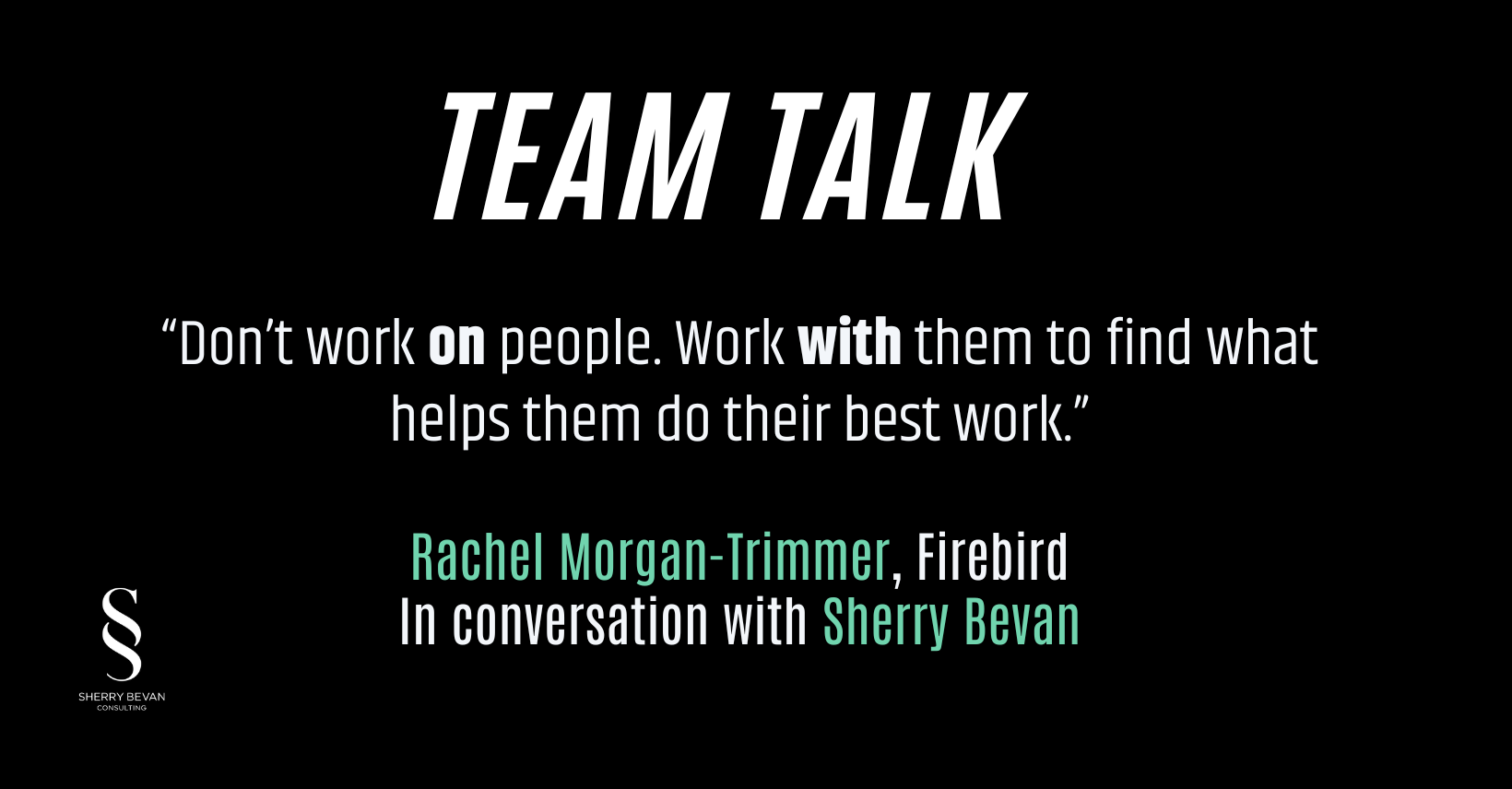
Work with people, not on them.
Don’t just hand someone an adjustment and walk away. Collaborate. Understand what works for them.
And don’t be afraid to suggest ideas. Leaders often hold back because they don’t want to offend, but thoughtful suggestions can be incredibly helpful.
Even if the idea doesn’t work, the act of offering shows care. And that alone can be a game changer.
There’s so much in this conversation we could explore further, but this has been incredibly valuable.
As we close, I always ask my guests: what’s your favourite sporting moment?
I’m a football fan, but my favourite moment comes from rugby league – the 2017 Super League Grand Final.
It was Rob Burrow’s last game for Leeds Rhinos. He was small for a rugby player – about 5’5” – but that became his superpower. He could get under defenders in a way no one else could.
That day, he came on and scored a try. It was incredible.
And for me, it’s symbolic. He used what looked like a disadvantage as an advantage. That’s exactly how I now see neurodiversity.
I love that – turning difference into strength.
Rachel, thank you so much. It’s been an absolute delight.
Thank you so much for having me.
About Rachel Morgan-Trimmer
Rachel Morgan-Trimmer is one of the UK’s most well-known neurodiversity experts. She is an international keynote and TEDx speaker who is renowned for breaking down barriers and her unique, often humorous approach to what can be a difficult topic.
She founded her neurodiversity consultancy Firebird to train companies in neurodiversity inclusion without, as she says, “the boring bits”.
Important links:
- Instagram: @rachel.firebird_neurodiversity/.
- LinkedIn: https://www.linkedin.com/in/rachel-morgan-trimmer/.
- Website: AskFirebird.com
- Linktree: https://linktr.ee/Rachel.Firebird_Neurodiversity
About your host Sherry Bevan
Sherry Bevan helps teams under pressure and teams in transition perform at their best – without the fluff. A former Global Head of IT Service in an international law firm, she now works across technology, professional services and the sports world.
Through her Team Performance Reset, Sherry supports new and changing teams to build trust, strengthen collaboration and set the foundations for high performance.
A former grassroots cyclist and still a runner, Sherry is fascinated by what sport can teach us about teamwork, leadership and sustainable performance – and it’s these ideas she explores with leaders and experts on Team Talk.
Connect with Sherry
- Sign up for news and updates.
- Apply to join the Team Culture Club.
- Connect on LinkedIn.